

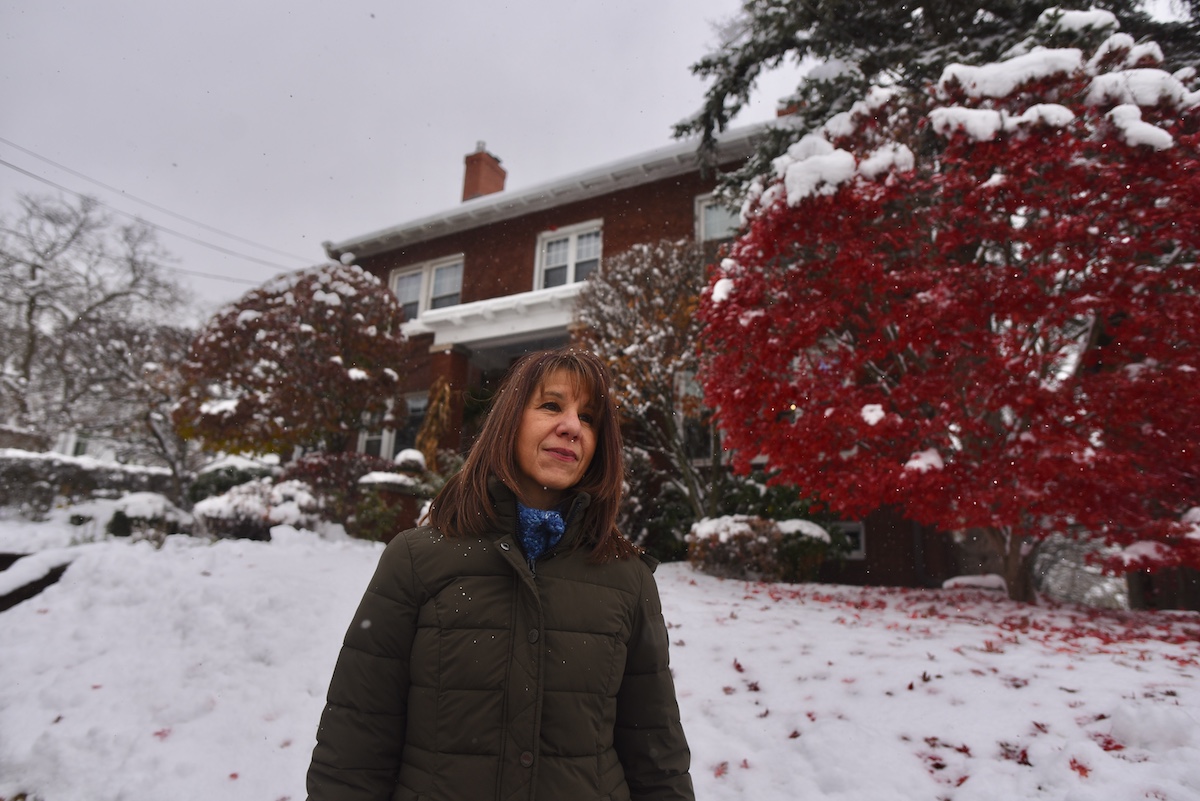
Anne Hardy stood at her kitchen counter and looked out the window. Heavy snowflakes fell from the sky, quickly covering everything outside in a blanket of white.
In mid-November, it was the first significant snowfall of the season to hit Bradford, a small rural city in Northwestern Pennsylvania less than 5 miles from the New York border.
“They won’t come,” Hardy, a retired emergency room nurse, said with a shake of her head.
They, being the helicopters that fly in and out of the region to transport patients with serious medical emergencies from Bradford Regional Medical Center, the local community hospital, to larger trauma centers in Erie and DuBois.
But this kind of weather made that dangerous. It also made it difficult for ambulances and cars to drive with urgency on any of the major roadways leading through the mountainous terrain and into the valley where Bradford, an acute care facility, could handle less critical cases. One ambulance slowed to a crawl on the slippery road, as it transported someone in need to the medical center.
When Hardy was younger, these travel issues were a moderate concern. More of an inconvenience, if anything, she said. She and her husband were relatively healthy and an emergency medical situation was unlikely. They rarely had to resort to their backup plan: driving west more than 80 miles on the interstate as fast as they could to reach the closest in-state high level trauma center in Erie.
But now, at 62 years old, Hardy and her husband, Jeff, worry about the “what ifs” all the time.
“I don’t want to be 75, my husband is having chest pain and I’m navigating driving in the dark an hour away, pretty quickly,” she said. “Because I know if I don’t what’s going to happen.”
Their fears of not being able to access critical medical care only got worse after the hospital closed its maternity ward, surgical services and intensive care unit early in COVID-19. The pandemic was a major financial strain to health systems, like Bradford, that were already struggling to balance their budgets; suddenly they had to care for a larger share of severely ill patients even as they were forced to cancel other surgeries and medical services that would normally bring in some revenue.
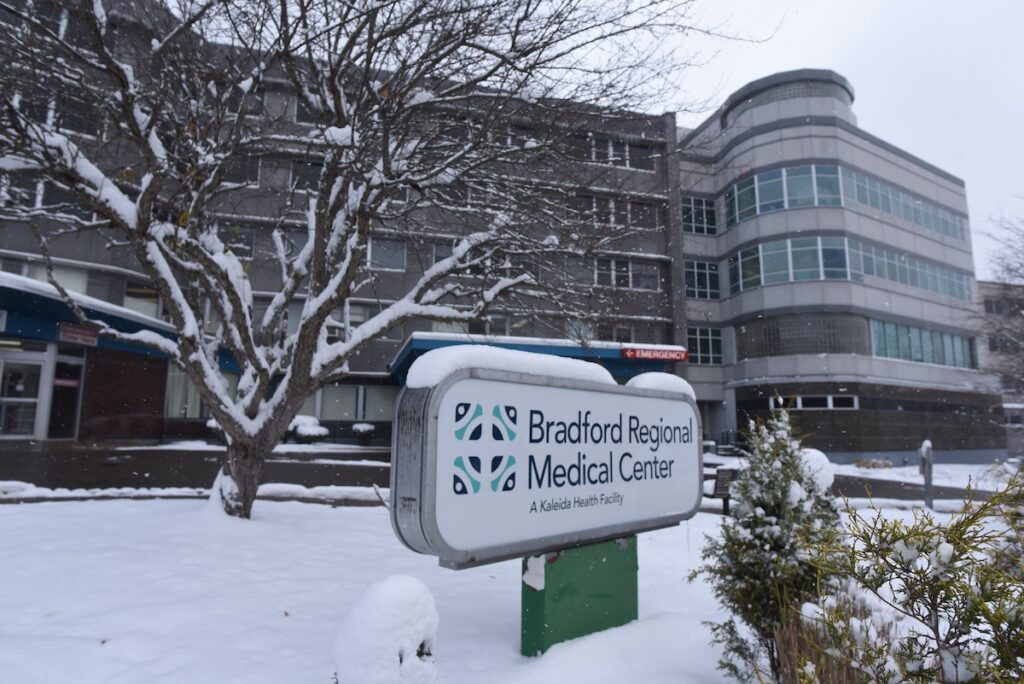
Bradford Regional Medical Center has served the community for more than 140 years. (Richard Sayer)So, they set a deadline for themselves: if the hospital didn’t restore some services or get sold to a new owner who would reopen departments at the facility by the time Jeff retired this year, they would move.
For Hardy, that would mean leaving the town she was born and raised in, where her kids grew up, and where generations of her family had settled. She still held some hope, however small, that things could turn around.
“And if we see improvement, maybe we stay,” she said. “I don’t want to leave my home.”
But what they could not know at the time was that in less than eight months, the owners of their hometown hospital would announce that financial losses had become too great, even after they participated in state programs and experiments designed to help struggling rural hospitals deliver healthcare services to the community.
Bradford Regional Medical Center would close as an inpatient and emergency care hospital after opening nearly 140 years ago.
Hardy knew better than most about how hospitals struggled to stay financially afloat. She worked as a nurse at the medical center for nearly 20 years and had run the emergency room at one point. But the closing still came as a shock.
“I’m not sure how a country survives without access to healthcare and the other things vital to keeping foresters, farmers, and other essential workers alive, but I suppose the future will tell. I hope it’s just a pendulum that will swing back someday,” she wrote in an email.
Challenges facing hospitals like the one in Bradford aren’t unique, but rather shared by many hospitals operating across rural America today.
These facilities often serve as the sole healthcare provider for large areas and regions, and it has become more difficult to recruit physicians and medical staff to live and work in such remote areas. Declining local populations also mean there are fewer residents and taxpayers to support a hospital, and people who live in these areas are more likely to suffer from chronic disease.
Over the last decade, politicians and policymakers in DC and many state capitols have proposed one plan after another to help financially struggling rural healthcare systems survive. But for all those discussions, Hardy has yet to see her community reap any of the benefits.
“It almost feels like the forgotten land,” Hardy said.


